Standardise intelligently
Consistency helps maintenance, but 100 identical layouts concentrate disposal risk.
Rental operators buy for tourism income, but their vehicles ultimately need to be sold into a private market with different preferences.
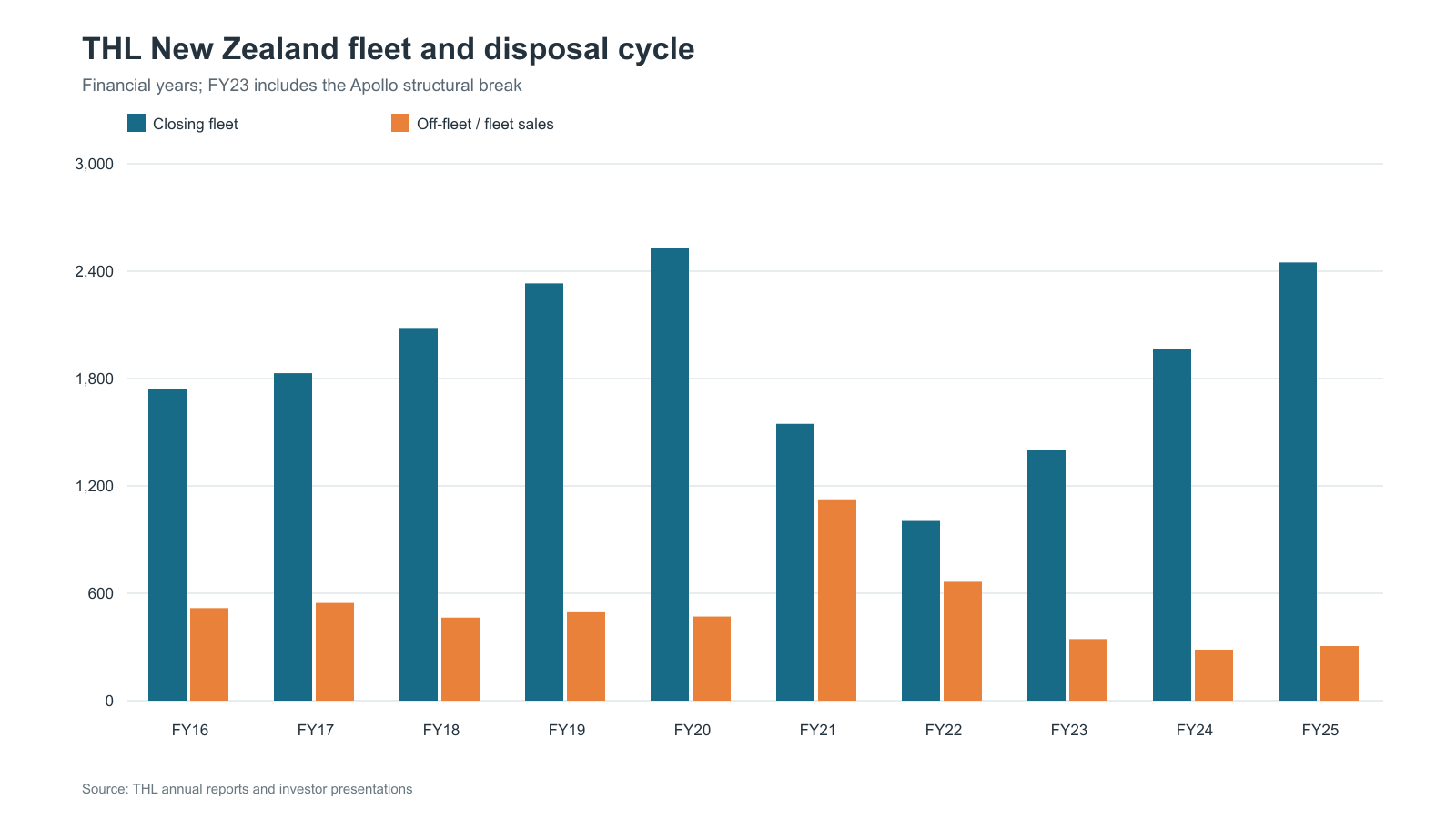
Evidence note: Company and estimated fleet counts are not directly additive across every date or definition. THL's later Apollo acquisition transferred fleet ownership rather than creating the same number of new national vehicles.
The figure is an industry operating assumption rather than a published NZTA or THL statistic. Its value is in showing the scale of use when the assumptions are stated.
| Measure | Private motorhome | Four-berth rental | Six-berth rental |
|---|---|---|---|
| Annual or seasonal travel | ≈6,000 km | ≈25,000 km | ≈25,000 km |
| Days in use | 21–28 days | ≈180 rental days | ≈180 rental days |
| Average occupancy | 2 people | 3 people | 4 people |
| Estimated occupant-days | 42–56 | ≈540 | ≈720 |
| Habitation-use multiple | 1.0× reference | ≈10–13× private use | ≈13–17× private use |
The October–April rental season contains 212 days. At 85% utilisation, a vehicle is occupied for approximately 180 days. Travelling 25,000 km over those occupied days equals about 139 km per rental day and 4.2 times the assumed 6,000 km travelled by a private motorhome in a full year.
Kilometres still understate the difference in habitation use. The same assumptions produce about 540 occupant-days for a four-berth rental and 720 for a six-berth, compared with 42–56 occupant-days for a private vehicle. That is why the condition of heating, cooking, refrigeration, water and bathroom systems matters alongside year and odometer reading.
Evidence note: This is a transparent comparison model using the study's industry assumptions: 1 October–30 April season, 85% utilisation, 25,000 rental kilometres, three occupants in a four-berth, four in a six-berth, and private use of two people for three to four weeks and 6,000 km a year. It is not a measured national fleet average.
It earns tourism income first, then becomes used supply. Fleet composition should therefore be planned around both stages.
Consistency helps maintenance, but 100 identical layouts concentrate disposal risk.
Compact four-berth models are easier to absorb than a heavy overcab six-berth mix.
Steady additions and disposals reduce the end-of-season stock wave.
A larger fleet can conceal weaker productivity when sell-through is delayed.
Condition, refurbishment, channel depth and release volume all influence price.
THL combines scale, rental purchasing, national retail distribution and public reporting. It also fully owns Action Manufacturing, after buying the remaining interest in 2021, giving it a vertically integrated build–rent–sell capability.
COVID cancellations displaced rental operators from the European build cycle. Flex fleet—leased Toyota Hiace cargo vans with temporary camping kits—provided capacity without the capital and later disposal burden of permanent motorhomes. UK ex-rentals added another route back into supply.
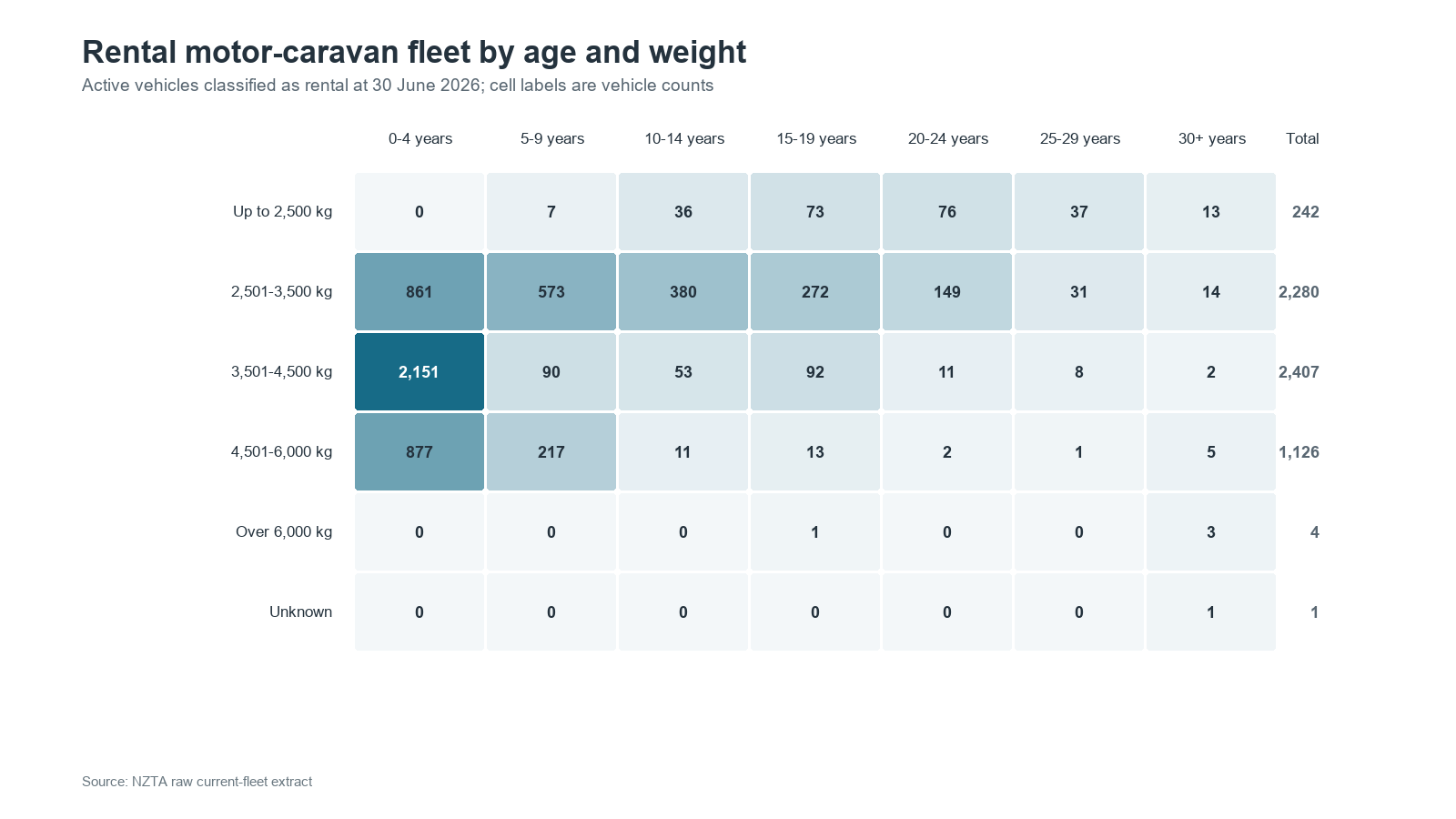
Older rental-classified vehicles can include former Jucy-style Toyota Hiace or Estima conversions and privately owned vehicles offered through peer-to-peer platforms such as Camplify. The NZTA rental category is therefore not a clean count of large professional fleets.
Rental intensity is also understated by kilometres. Under the operating assumptions above, a rental travels about 4.2 times the annual kilometres of a private motorhome but accumulates approximately 10–17 times the occupant-days. The higher habitation-use multiple is the more relevant indicator of wear inside the motorhome.
Moving from a longer ownership term to three or four years would release more late-model stock into the same ownership market. The vehicles would compete most directly with near-new private units and lower-priced new products.
Shorter cycles may improve rental consistency and residual quality, but they shift more disposal risk into the retail channel. If fleet size also grows 5%, replacement releases compound rather than merely replace current supply.
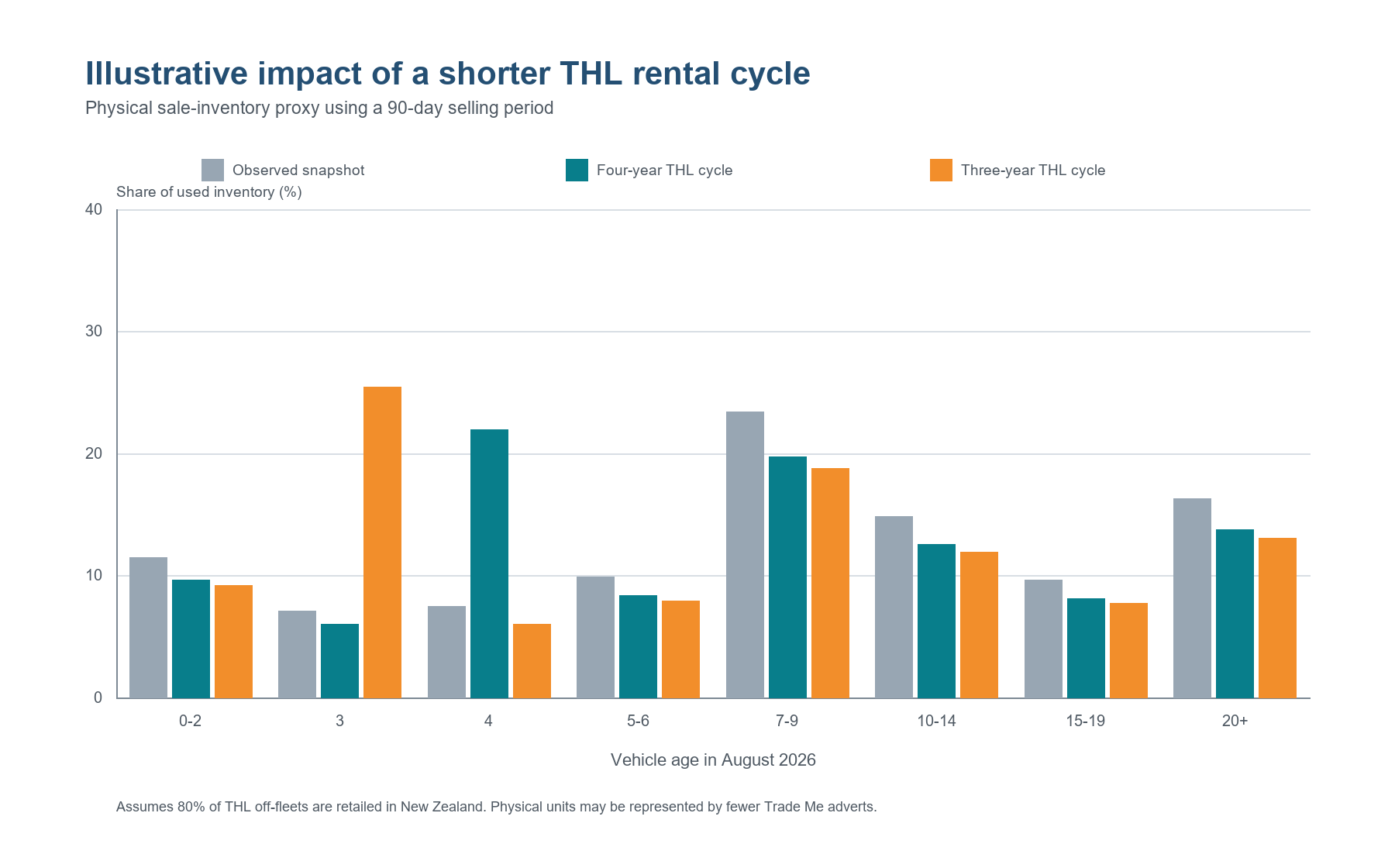
This chart does not describe the rental fleet. It describes the used market into which younger ex-rental vehicles would have to be sold.
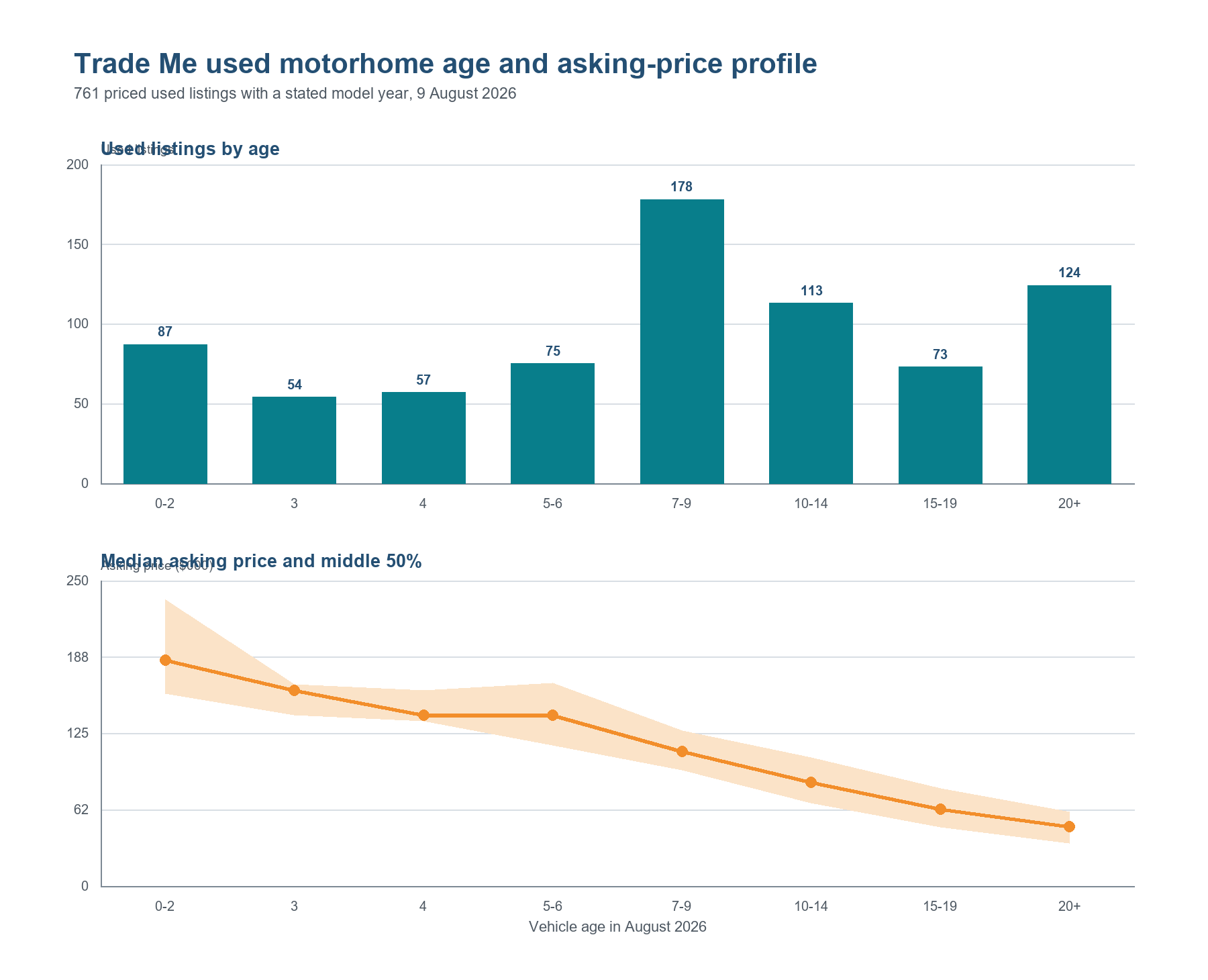
Of 1,054 used listings in the snapshot, 761 had both a usable model year and asking price. Only 54 were three years old and 57 were four years old. The median asking price was $159,990 at age three and $140,000 at age four.
RV Super Centre accounted for 21 of the priced three-year-old listings and 10 of the four-year-old listings. Its corresponding medians were $159,990 and $139,990. This places THL directly inside the late-model price bands that would receive additional stock if the rental holding period shortened.
The current listings do not prove what a much larger disposal cohort would achieve. One advertisement may represent several vehicles, and the chart does not control for layout, kilometres, condition or provenance. If many similar three- or four-year-old units were released together, the existing advertised medians would be a starting reference—not evidence that the full cohort could clear at those prices.
A current operator-by-operator national fleet count is not publicly available. The next data release should add current fleet size, average age, annual additions, off-fleet releases, utilisation, days to sale and achieved disposal prices where disclosure permits.
Separate professional fleets from peer-to-peer rentals and identify each major operator.
Expected monthly disposals by age, layout, kilometres and vehicle weight.
Days to sale, discounting, trade-ins and achieved—not advertised—prices.
Fleet utilisation and revenue per available vehicle alongside fleet growth.